24th Joint Multidisciplinary Research Conference Delegate | STEM Educator | AAIRI Emerging Researcher
Pathways to Innovation
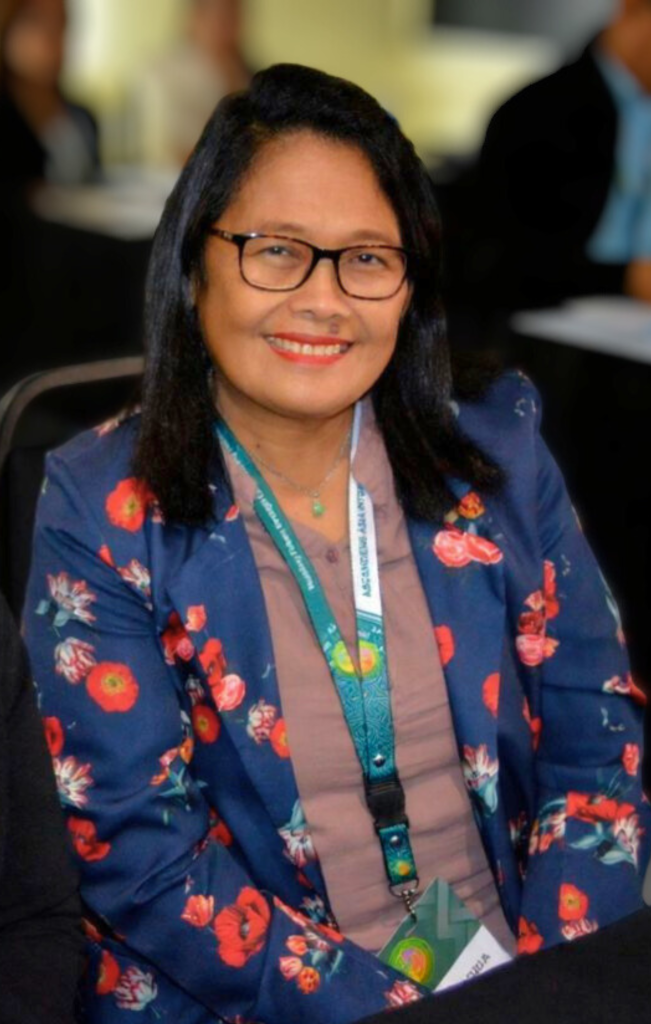
For nearly seven years, Dr. Ma. Victoria C. Magayon has served as a STEM teacher at Taytay Senior High School (DepEd Rizal), shaping not only academic performance but also research culture. Her formal research journey deepened during her doctoral studies in Curriculum and Instruction at the University of Santo Tomas, where she embraced a decisive mantra: publish, not perish.
Armed with expertise in curriculum design and social science research, she developed a curriculum alignment strategy known as Project IELTS—Ideation, Exploration, Laboratory, Testing, and Sharing. The framework was crafted to make STEM research more accessible and achievable for senior high school learners, transforming research from an intimidating requirement into a structured, empowering process.
While she began in social science research, Dr. Magayon soon found herself inspired by the ingenuity of her STEM students. In Taytay—known for its vibrant textile industry—her learners developed composite boards, paper, and leather alternatives from textile waste. These innovations have even been presented for potential adoption in local government initiatives, including textile waste upscaling projects in partnership with the Department of Science and Technology(DOST).
For Dr. Magayon, research is not confined to laboratories—it lives in communities.
Soap Residue, Sustainability, and Scientific Responsibility
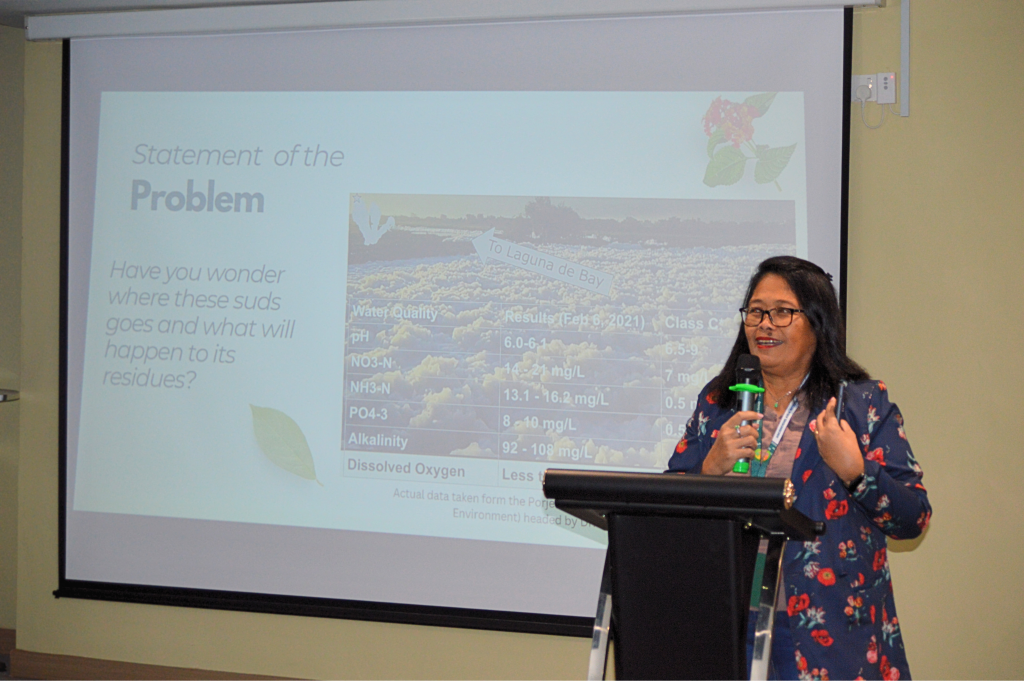
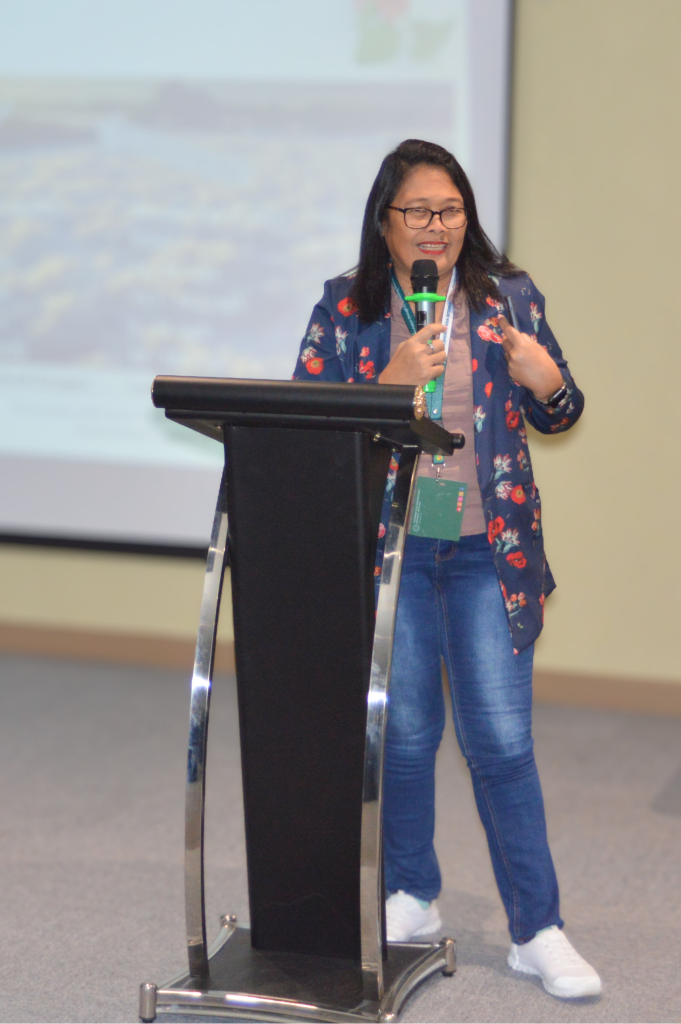
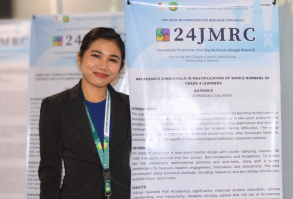
At the 24th Joint Multidisciplinary Research Conference (24JMRC) in Kuala Lumpur, Malaysia, Dr. Magayon presented her study:
“Hand Soap Out of Lantana camara L. Extract and Its Characterization and Residue Counts Compared with Other Soaps.”
The research, inspired by environmental data from Taytay Rivers, explores the environmental persistence of soap residues. Studies reveal that a measurable percentage of soap residue remains even after 87 days of chemical disintegration—raising concerns about clogged drainage systems and urban flooding.
Determined to respond with a sustainable alternative, Dr. Magayon investigated the potential of Lantana camara L., a common shrub often overlooked in local communities. From its extracts, she has already developed an antifungal ointment and is now formulating a natural perfume using its aromatic properties.
“I am happy doing the research,” she shares. “I gather all the raw materials in my hometown, where these plants are just ordinary shrubs. I love tiny flowers, and I am amazed by the scent of this flower.”
Her most remarkable finding? The residue count of her plant-based soap is comparable to commercial germicidal and beauty soaps—proving that eco-friendly solutions can match mainstream products in effectiveness.
Research Challenges and Milestones
The journey has not been without obstacles. One significant barrier remains the cost of human testing required by DOST for full product validation—a financial hurdle for many educator-researchers.
Yet Dr. Magayon continues, driven by curiosity and purpose. For her, the research process itself—collecting local materials, observing chemical reactions, analyzing residue counts—has been as meaningful as the results.
Her work reflects a larger advocacy: empowering teachers and students to solve real community problems using research and innovation.
Learning Beyond Borders
Dr. Magayon attended the 24JMRC not only to present her work but to refine her global perspective as an educator.
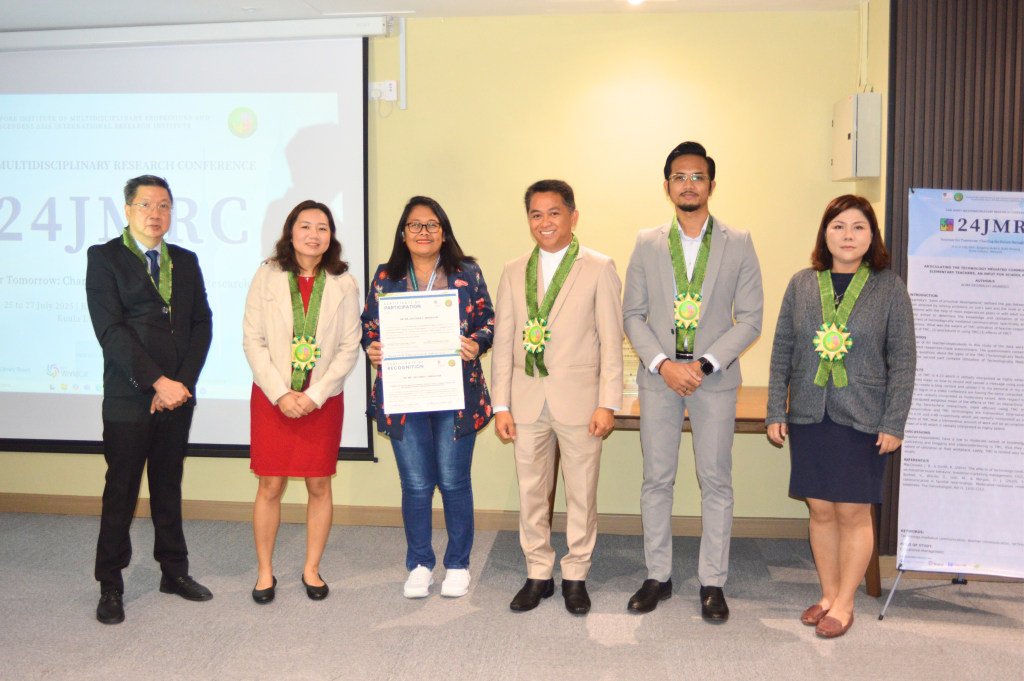
“I love attending conferences to learn to make my students at par with the international standard,” she says.
Engaging with an international audience affirmed her belief that Philippine-based research—rooted in local challenges—has global relevance. She was especially inspired by the creativity of young researchers, including projects like emergency call systems designed to address urgent societal needs.
For her, conferences are not endpoints—they are catalysts.
The Road Ahead: Natural Fibers and National Reform
Currently, Dr. Magayon is exploring research on natural fibers derived from Ba’ay, a root crop native to Capul, Northern Samar—her hometown. Her continued focus on indigenous resources reflects her commitment to community-based innovation.
Looking forward, she aims to institutionalize Project IELTS nationwide, enabling STEM teachers across the country to adopt a structured research alignment model. Initial collaborations are underway, with Filscihub planning to introduce the framework to more educators next year.
Her broader vision is ambitious yet clear:
- Encourage more teachers to publish.
- Support students in presenting globally.
- Strengthen research culture in Philippine secondary education.
“Creating eco-friendly soap from Lantana camara L. not only addresses environmental challenges but also promotes community-based research and sustainable development.”
— Dr. Ma. Victoria C. Magayon
Growing with AAIRI
Dr. Magayon’s journey with the Ascendens Asia International Research Institute (AAIRI) began in 2019, when ten of her students’ research projects were accepted into a conference—one even earning Best Presenter recognition.
That milestone affirmed her direction as a research adviser.
“I want to be part of whatever capacity I can share as a research adviser. I will continue to encourage my students to go beyond the classroom.”
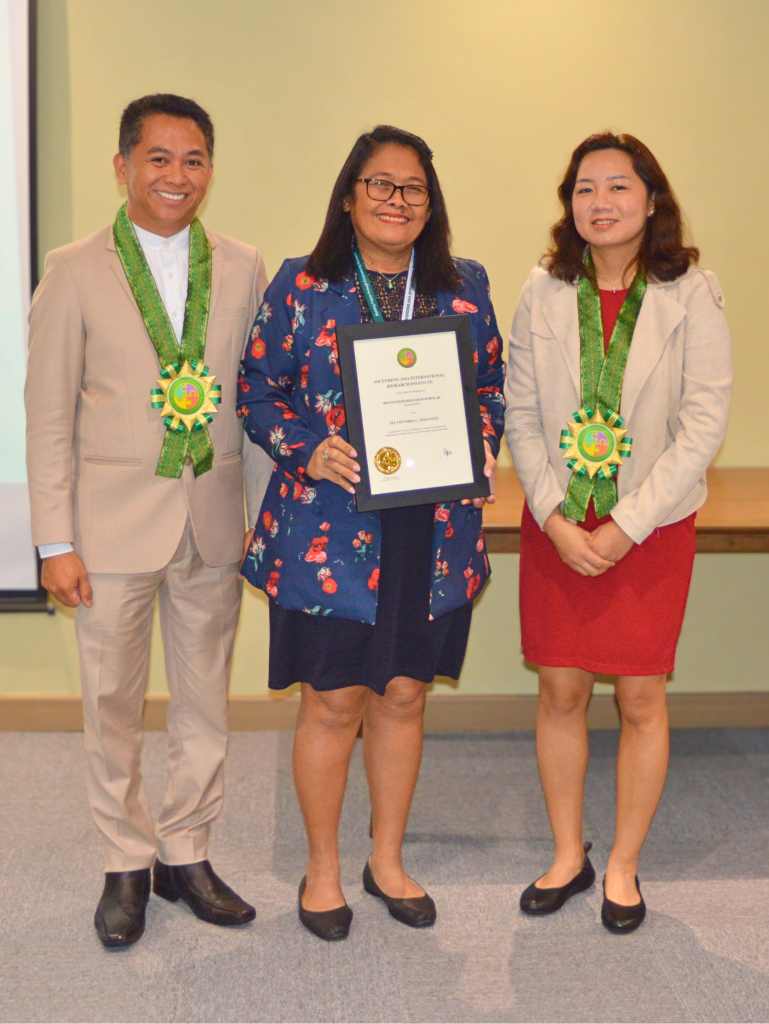
Through AAIRI’s international platforms, her students—and now she herself—have gained exposure, confidence, and opportunities to contribute to global scholarly conversations.
A Final Reflection
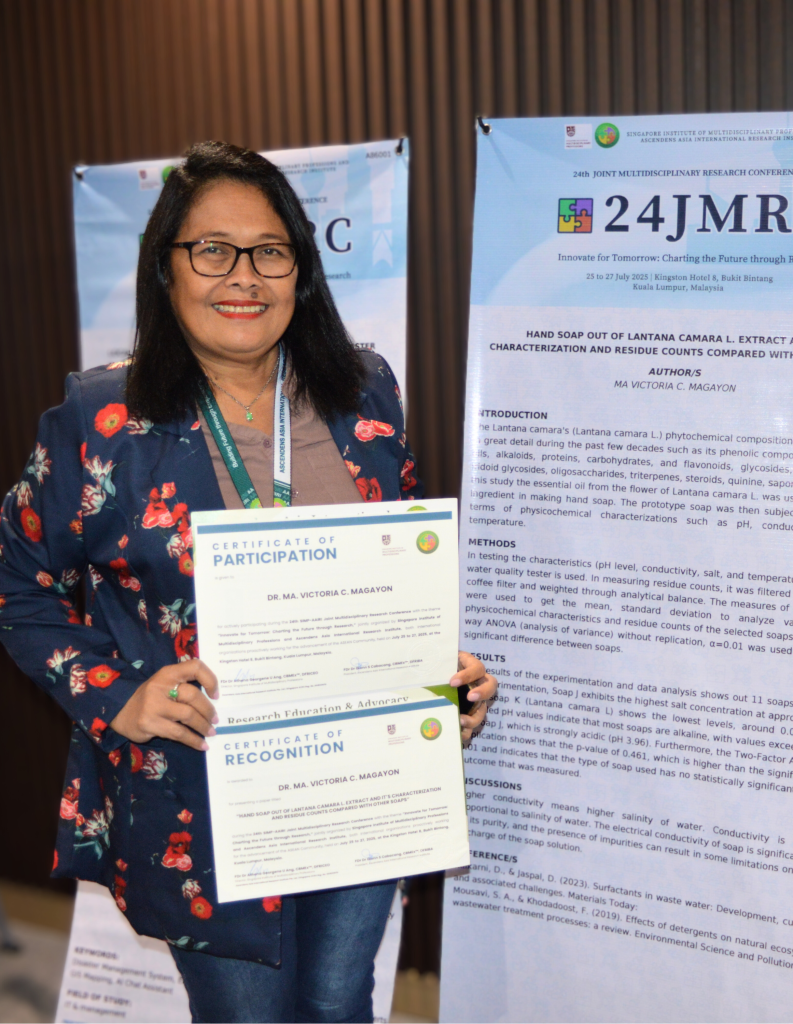
“My research began with a simple curiosity about local plants. Seeing my students turn community challenges into innovative solutions inspires me to keep empowering them. Together, we can build a sustainable and progressive transformation through STEM education.”
In Dr. Magayon’s classroom, research is not an abstract academic exercise. It is a tool for national transformation—where tiny flowers, local roots, and student ideas bloom into sustainable solutions.
For educators and researchers seeking a platform to amplify community-driven innovation, AAIRI continues to open pathways where science meets sustainability—and where research shapes the future.
For more information on upcoming research festivals and collaborations, stay connected with Ascendens Asia International Research Institute.
Email: connect@aairi.org
WhatsApp: +63 (976) 413 1096 / +65 8413 7706




Social Profiles